

The Psychology Behind Posts People Actually Share
You probably scroll through hundreds of social media posts a day but only share a handful. What separates the posts you ignore from the ones you send to a friend? Sharing isn’t random. In fact, psychology suggests there are three primary motivators for why people choose to share content. Understanding these can help your business organically reach larger, more relevant audiences.
So What Motivates Sharing?
- Emotions & Connection
- Identity
- Practical Value
Emotions & Connection
Social media is about connection, not just promotion. People share content that makes them feel something. Whether it’s joy, inspiration, surprise, humor, or even nostalgia, emotional content is what breaks through the noise of a crowded feed. On Facebook and Instagram especially, users are more likely to share posts that create an immediate emotional reaction because it gives them something meaningful to pass along to others.
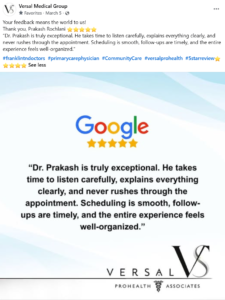 But emotion alone isn’t always enough. The strongest-performing content often also creates a sense of connection, either between the user and the brand, or between the user and their own network. This is why storytelling typically performs so well. A post about a real customer experience, a behind-the-scenes moment, or a relatable struggle makes people feel less like they’re being marketed to and more like they’re part of a shared experience. When content feels human, people are far more likely to share it with someone who might feel the same way.
Take this post, for example. This patient testimonial we shared for Versal ProHealth highlights a real patient’s positive experience rather than solely promoting a medical service. By showcasing genuine feedback about feeling heard, cared for, and supported, the post creates an emotional connection that resonates with prospective patients. Authentic stories like these help humanize a brand, build trust, and give audiences something meaningful to engage with and share.
Identity
One of the most powerful drivers of social sharing is identity. People use the content they share as a way to express who they are, what they care about, and how they want to be seen by others. A shared post is usually less about the content itself and more about what it says about the person sharing it.
For businesses, this means your content should go beyond promoting a product or service. Instead, it should reflect values or identities your audience wants to associate with. For example, a local business posting about supporting other small businesses, or a brand highlighting sustainability efforts, gives customers something they can align themselves with. When someone shares a post, they are also signaling their own values to their network. The more your content aligns with identity and expression, the more naturally it spreads.
For instance, this Earth Day post we created for Versal ProHealth goes beyond promoting a healthcare service by connecting wellness with environmental awareness. People who share content like this aren’t simply promoting the medical practice—they’re expressing values such as healthy living, personal well-being, and caring for their community. By aligning the brand with beliefs that resonate with its audience, the post becomes more than an advertisement; it becomes a reflection of the person sharing it.
Practical Value
People are also more inclined to share content when it is useful. If a post solves a problem, answers a question, or makes someone’s life easier, it becomes easily shareable. This is one of the most consistent drivers of sharing across all types of audiences because it extends beyond emotion or identity and provides direct value.
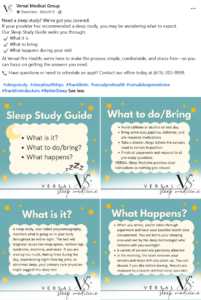 For small businesses, this can take many forms. Educational posts, quick tips, step-by-step guides, and industry insights are likely to perform well because they give audiences something tangible they can use or pass along. On Facebook especially, users often share practical content with friends or family who they think will benefit from it. The key is simple: if your content is genuinely helpful, people don’t just consume it, they distribute it for you.
For example, this educational carousel we curated for Versal Sleep Medicine walks patients through exactly what to expect during a sleep study. By answering frequently asked questions and providing clear instructions, the post serves as a helpful resource rather than a traditional advertisement. Because the information is immediately useful, people are more likely to save it for later or share it with someone who could benefit from it.
Using Psychology to Craft Your Social Media Strategy
Understanding why people share content is only valuable if it translates into strategy. By applying these psychological motivators intentionally, businesses can move from posting randomly to creating content that is more likely to resonate, engage, and spread organically.
- Focus on Emotion
- Does this content inspire, entertain, or create an emotional reaction strong enough that someone feels compelled to pass it along?
- Reinforce Brand Values
- Does this content clearly reflect what your brand stands for in a way that audiences would want to associate themselves with it?
- Encourage Conversation
- Does this post invite interaction, discussion, or response therefore turning passive viewers into active participants?
- Provide Value
- Is there something in this content that is genuinely useful enough for someone to save, reference, or share with others?
The Numbers Don’t Lie
When it comes to social media strategy, assumptions only go so far. Performance data tells the real story. Instead of guessing what will resonate, businesses should consistently evaluate which posts are being shared, saved, or sent to others, especially on platforms like Facebook and Instagram where sharing is a key form of engagement.
Looking at patterns over time can reveal what your audience truly responds to. Do emotionally driven posts outperform promotional ones? Do educational or “how-to” posts get shared more frequently? These insights allow businesses to refine their content strategy based on real behavior. Over time, this data-driven approach creates a feedback loop: better insights lead to better content, which leads to stronger engagement and increased reach.
People don’t share content because an algorithm tells them to. They share content because it makes them feel something, reflects who they are, or provides value.
Understanding these motivations can help businesses create content that not only reaches a larger audience, but reaches the right audience. It is the first step toward creating a stronger, more intentional social media strategy. At Walsh Marketing Group, we help businesses turn these insights into content that performs across platforms.
Check out the Versal Medical Group Facebook Page to see more examples of the work Walsh Marketing Group has done. If you’re looking to improve your social media strategy or create content that your audience wants to share, we would love to help. Contact us at 603-714-4718 or fill out this form for a FREE consultation.
References
Berger, J. (2025). What gets shared, and why? Interpersonal communication and word of mouth. Annual Review of Psychology, 76(1), 559-581. https://doi.org/10.1146/annurev-psych-013024-031524
Botha, E., & Reyneke, M. (2013). To share or not to share: The role of content and emotion in viral marketing. Journal of Public Affairs, 13(2), 160-171. https://doi.org/10.1002/pa.1471
Chang, Y.-T., Yu, H., & Lu, H.-P. (2015). Persuasive messages, popularity cohesion, and message diffusion in social media marketing. Journal of Business Research, 68(4), 777-782. https://doi.org/10.1016/j.jbusres.2014.11.027
Chen, Y., & Kirmani, A. (2015). Posting strategically: The consumer as an online media planner. Journal of Consumer Psychology, 25(4), 609-621. https://doi.org/10.1016/j.jcps.2015.02.003
Drossos, D., Coursaris, C., & Kagiouli, E. (2023). Social media marketing content strategy: A comprehensive framework and empirically supported guidelines for brand posts on facebook pages. Journal of Consumer Behaviour, 23(3), 1175-1192. https://doi.org/10.1002/cb.2269
Fu, P.-W., Wu, C.-C., & Cho, Y.-J. (2017). What makes users share content on facebook? Compatibility among psychological incentive, social capital focus, and content type. Computers in Human Behavior, 67, 23-32. https://doi.org/10.1016/j.chb.2016.10.010
Rainy, T., & Mou, A. J. (2025). Strategic use of engagement marketing in digital platforms: A focused analysis of roi and consumer psychology. SSRN Electronic Journal. https://doi.org/10.2139/ssrn.5340377
Rathje, S., & Van Bavel, J. J. (2025). The psychology of virality. Trends in Cognitive Sciences, 29(10), 914-927. https://doi.org/10.1016/j.tics.2025.06.014